This workshop is organised as part of the Catalyst: Seeding project "Advanced AI Methods for Biomarker and Drug Discovery". It brings together leading researchers from artificial intelligence, molecular sciences, drug design, and biochemistry.
The workshop is motivated by the vision of developing advanced AI methods that integrate biomarker discovery, molecular modelling, and drug candidate identification into a more effective discovery pipeline.
A key objective is to connect researchers working in AI with experts in drug design and biochemistry — creating opportunities for interdisciplinary exchange and collaboration that bridge computational innovation with real biological and therapeutic challenges.
Supported by
Royal Society of New Zealand — Catalyst Seeding Fund
School of Mathematics and Statistics (SMS), Victoria University of Wellington
Centre for Data Science and Artificial Intelligence (CDSAI), Victoria University of Wellington
Interdisciplinary Exchange
Connect AI researchers with experts in drug design and biochemistry for cross-disciplinary collaboration.
Recent Advances
Showcase cutting-edge work in AI, AI for molecular sciences, AI for drug discovery, and biochemistry.
Future Collaborations
Identify opportunities for joint research projects and international funding proposals.
Open Access
Registration is free and open to all researchers, students, and industry professionals interested in the field.
Speakers
Keynote Speakers
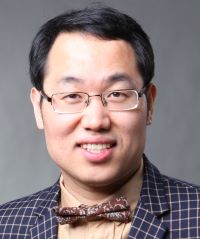
Keynote Speaker
A/Prof Kelin Xia
School of Physical & Mathematical Sciences Nanyang Technological University, Singapore
Mathematical AI for Molecular Sciences: From Topological Data Analysis to Topological Deep Learning
A central challenge in AI-driven molecular science lies in efficiently representing molecular data and developing learning architectures that capture intrinsic structure-function relationships. We introduce advanced mathematics-based molecular representations and learning frameworks. Molecular structures and interactions are encoded using high-order topological and algebraic representations, including Rips complexes, Alpha complexes, Neighborhood complexes, Dowker complexes, Hom-complexes, Tor-algebras, Rhomboid tilings, Sheaves, and Categories. Building on these foundations, we design physics-informed geometric and topological deep learning models that systematically integrate high-order, multiscale, and periodic information of molecular systems.
Dr. Kelin Xia obtained his Ph.D. from the Chinese Academy of Sciences in 2013 and was a visiting scholar at Michigan State University (2009–2012). He was a visiting assistant professor at Michigan State University (2013–2016) before joining Nanyang Technological University, where he was promoted to Associate Professor in 2023. His research focuses on Mathematical AI for molecular sciences. He has published more than 90 papers in SIAM Review, Nature Methods, Nature Machine Intelligence, Science Advances, and more. He is a Stanford & Elsevier World's Top 2% Scientist (2024 & 2025).
Keynote Speaker
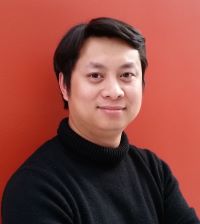
Prof Vinh Nguyen
School of Chemistry The University of New South Wales, Australia
Designing Chemical Space at Speed: AI, Automation, and Reactivity-Driven Routes to Functional and Bioactive Molecules
Molecule discovery is increasingly constrained not by ideas, but by the speed and reproducibility with which chemical matter can be designed, made, and iterated. This seminar will describe a molecular-science-first approach to “bridging AI and Chemistry,” where mechanistic insight, modern synthesis, and automation are integrated into closed-loop workflows that generate both molecules and the high-quality data required to predict the next ones. I will highlight how new reactivity platforms in synthetic methodology, including selective carbonyl olefination and skeletal editing strategies, can convert readily available starting materials into complex, drug-like architectures with rapid diversification at late stages. These transformations provide an ideal testbed for AI, because they expose interpretable structure–reactivity patterns that can be learned, stress-tested, and deployed for design.
I will then discuss how robotic synthesis and high-throughput experimentation enable self-driving optimization, producing reproducible datasets that connect reaction outcomes to controllable variables (substrate features, microenvironment, catalyst networks, and process parameters). Finally, I will outline a translational pathway that couples AI-enabled synthesis to real therapeutic needs through industry partnerships, enabling faster lead generation, improved manufacturability, and more sustainable chemistry. The overarching message is that the next generation of drug discovery will be built not only on better models, but on better molecular platforms that make chemical space accessible, predictable, and scalable.
Prof. Vinh Nguyen (also known as Thanh Vinh Nguyen) was born in Vietnam and studied industrial chemistry at UNSW before completing his Ph.D. in organic chemistry at ANU with Prof Michael Sherburn. He held a Humboldt Postdoctoral Fellowship at RWTH Aachen under Prof Dieter Enders. He joined UNSW in 2015 as Lecturer/ARC DECRA Fellow, was promoted to Senior Lecturer (2018), Associate Professor (2022), and Professor (2026). His research covers organocatalysis, aromatic cation activation, synthesis of bioactive compounds, asymmetric synthesis, and medicinal chemistry.
Invited Speakers
Prof Mengjie Zhang
Director, CDSAI · Victoria University of Wellington
Prof Bing Xue
Deputy Director, CDSAI · Victoria University of Wellington
Dr Binh Nguyen
SMS & CDSAI · Victoria University of Wellington
Dr Phillip Rendle
Deputy Director, Ferrier Research Institute · Victoria University of Wellington
A/Prof Simon Hinkley
Science Team Leader, Ferrier Research Institute · Victoria University of Wellington
Schedule
Workshop Program
Monday, 20 April 2026 · KK301, Kirk Building, VUW
9:00 – 9:05
Opening
Welcome & Housekeeping
Dr Binh Nguyen — SMS & CDSAI, VUW
9:05 – 9:30
Opening
Opening Remarks
Prof Mengjie Zhang — Director of CDSAI, VUW
9:30 – 10:30
Keynote
Mathematical AI for Molecular Sciences: From Topological Data Analysis to Topological Deep Learning
A/Prof Kelin Xia — Nanyang Technological University
10:30 – 11:00
Break
Morning Tea
11:00 – 11:30
Invited Talk
AI for Medical and Health Data Analysis
Prof Bing Xue — Deputy Director of CDSAI, VUW
11:30 – 12:00
Invited Talk
AI for Drug Discovery: From Molecular Representation Learning to Activity, Affinity & ADMET Prediction
Dr Binh Nguyen — SMS & CDSAI, VUW
12:00 – 13:00
Break
Lunch
13:00 – 14:00
Keynote
Designing Chemical Space at Speed: AI, Automation, and Reactivity-Driven Routes to Functional and Bioactive Molecules
Prof Vinh Nguyen — School of Chemistry, UNSW
14:00 – 14:30
Invited Talk
Introduction to the Ferrier Research Institute and the Challenges/Opportunities of using AI in Drug Discovery
Dr Phillip Rendle — Deputy Director of the Ferrier Research Institute, VUW
14:30 – 15:00
Invited Talk
Bees, Mould and Beer: A Snapshot of Carbohydrate Research Activities
A/Prof Simon Hinkley — Ferrier Research Institute, VUW
15:00 – 15:30
Networking
Afternoon Tea & Networking
📍 Venue
Room: KKLT301, Level 3, Kirk Building
Campus: Kelburn Campus
Institution: Victoria University of Wellington
City: Wellington, New Zealand
✏️ Registration
Attendance is free and open to all. Registration is required for catering purposes — please fill in the form below before the event.